
How to read baby clothing material labels
26 October 2026 · Koalinus editorial team
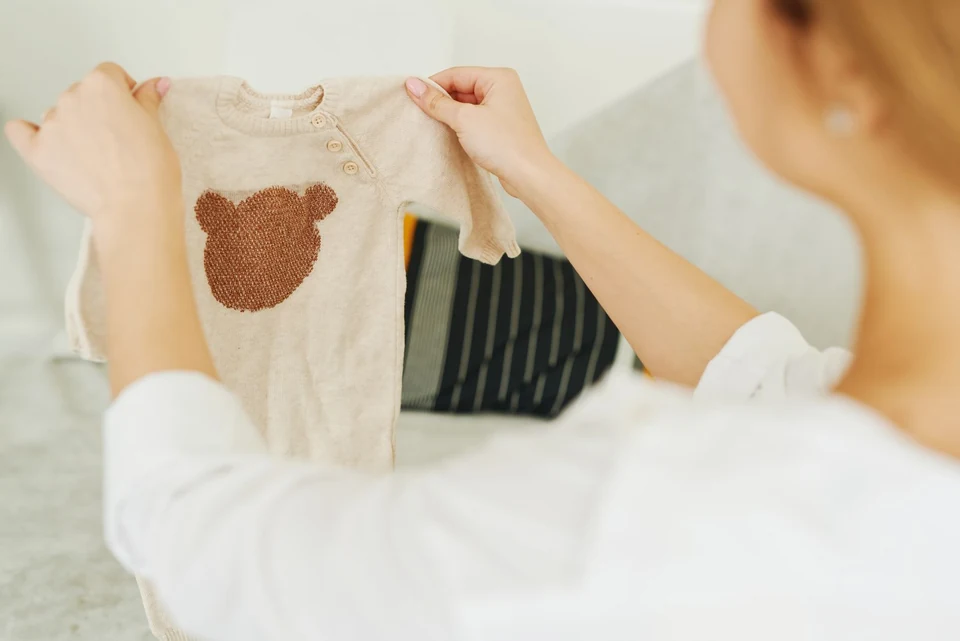
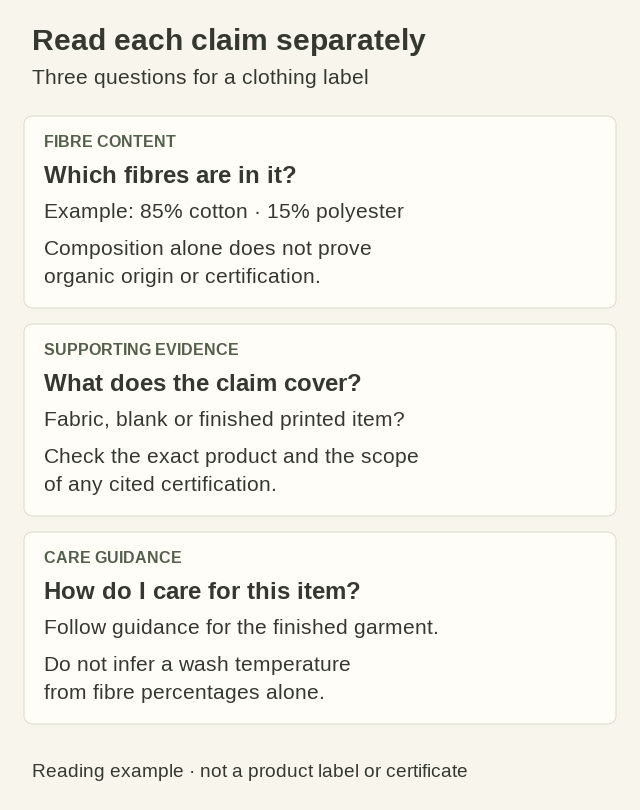
Two bodysuits can look alike while carrying different material descriptions. Read fibre content, supporting evidence and care separately when comparing them. Composition tells you which fibres are present. Certification evidence has a particular scope. Care guidance concerns the finished item.
What does the composition line tell you?
Start with the full composition of the selected variant. As a fictional reading example, "85% cotton, 15% polyester" describes a blend; "100% cotton" describes a different composition. This does not create an automatic quality ranking. Record the fibres together with the model and colour.
The EU information on textile labelling specifies fibre content in decreasing percentage order and a clear separation between composition and other information, such as care. Look for the complete composition line, not just the word "cotton". This article is a reading aid, not a complete legal compliance checklist.
What does an organic or certification claim cover?
If a description mentions "organic cotton", look for its exact scope: which proportion and which component does it refer to? Is it about the fabric, the unprinted blank or the finished printed garment?
GOTS describes certification of processing stages from certified organic fibre through to the finished product. Naming an organic fibre alone does not establish GOTS certification of the finished item. Do not assume that evidence for an earlier processing stage covers a garment printed later.
Ask: "Which exact product and processing stage does the evidence cover, and where can I check it?" If the answer remains open, record it as unresolved. A missing answer is neither positive evidence nor automatic proof that a claim is false.
Why care remains a separate question
Cotton content does not give you a universal washing temperature. GINETEX identifies dyes, printing, finishing and other components as factors alongside the raw materials. Look for guidance for the finished garment and any additional instructions for the print.
If a label is unreadable or two instructions conflict, ask the supplier before treating the item. Our guide to washing printed baby clothes explains how to read garment and print instructions together. It does not replace instructions for the particular piece.
Keep a material note for the next comparison
Save the model name, selected colour, link and date alongside the complete composition line. Add "Evidence and its scope" and "Care for the finished item". Keep open questions and replies with the same record.
- Have I read the composition of the selected variant?
- Is it clear which component an organic claim refers to?
- Can I connect the evidence to this particular item?
- Which material or care question remains unanswered?
The same applies to our Koalinus baby T-shirt: material details belong to the particular model and variant. The catalogue shows previews; orders are not available yet. This article does not claim certification of our finished printed products. For the separate question of fit, see the measuring aid in our size guide.